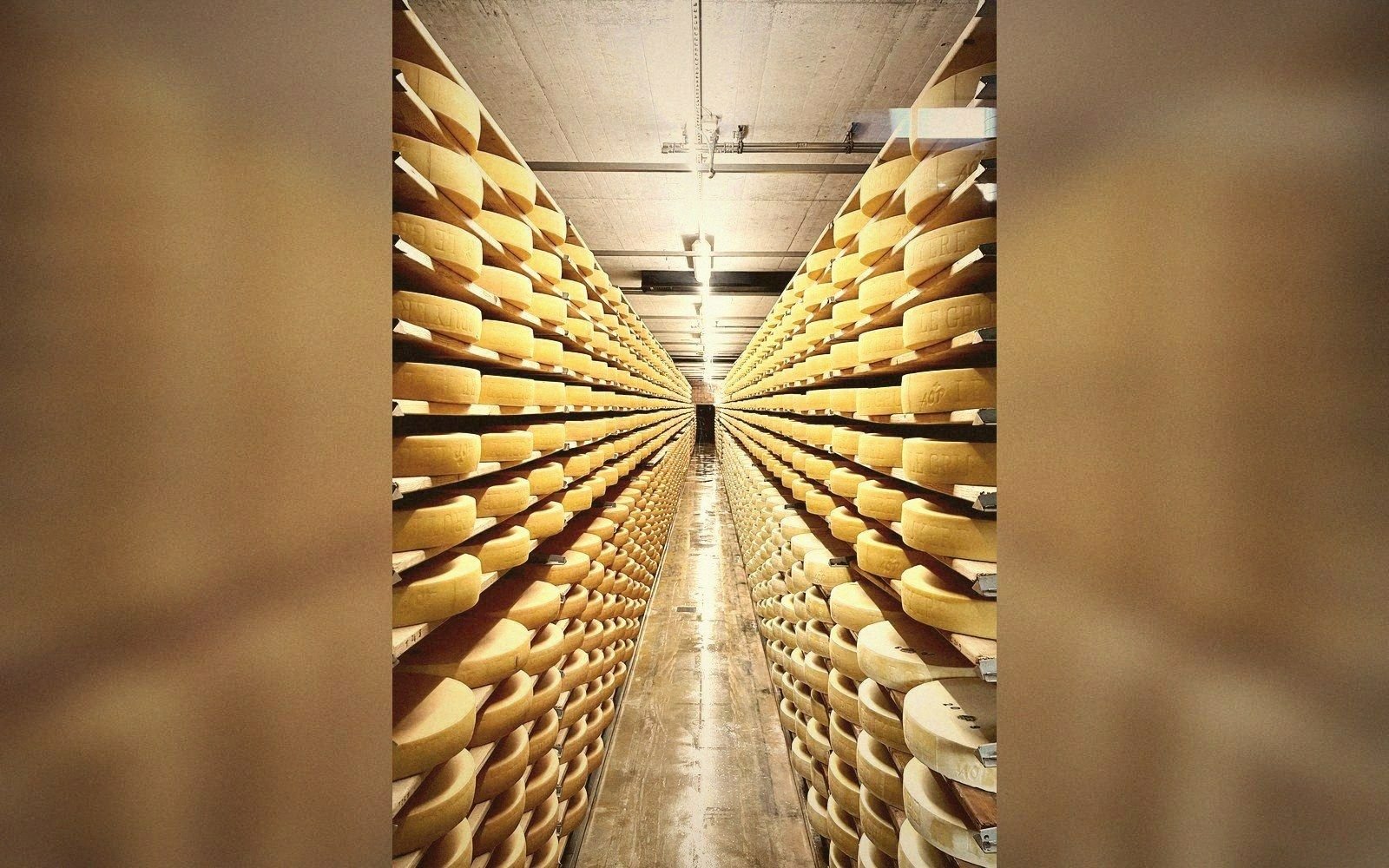
What affinage actually means
Affinage — the art and trade of ageing cheese — is not a romantic afterthought. It is a distinct profession, carried out by people who are neither the farmer nor the cheesemonger, though sometimes those roles overlap in the same pair of hands. The affineur takes a young cheese in a controlled environment — a cave, a cellar, a purpose-built hâloir — and manages it through to readiness: turning it, washing the rind, brushing it, monitoring humidity and temperature, watching for the moment when chemistry and commerce align.
What the affineur is actually managing is microbial activity. The moulds, yeasts and bacteria responsible for the rind and the paste are not decorative; they are the mechanism. A Camembert de Normandie is pressed into its box at roughly ten to twelve days old, but its paste is still chalky at the centre, not yet broken down by the Penicillium camemberti working inward from the rind. Given another week or two in the right conditions, the interior softens to the characteristic ooze. Given too long, it collapses and smells of ammonia. The window is real, and it is narrow.
With a hard cheese, the timeline expands but the principle is identical. A Comté aged for twelve months is a different food from one aged for twenty-four: the free amino acids that form during extended proteolysis produce those hard white crystals and the deep, slightly caramelised savour that shorter-aged wheels lack. An affineur selecting Comté wheels at the fruitière in the Jura is betting on how a specific wheel will develop — reading the paste through the rind, sometimes using a sampling iron to extract a thin plug. That judgement is what is being sold when you pay more for a well-aged piece.
What it means at the market stall
For the home cook buying from a market, the lesson is practical. A cheese sold before its time is not merely disappointing; it is, in a strict sense, not yet itself. The flavour compounds that define a mature munster, a runny époisse or a properly aged chèvre have not yet formed. Buying on appearance alone will mislead you: a Brie-style cheese can look ripe when the top surface has softened but the centre remains a solid, faintly sour disc.

Knowing how to read a cheese before buying matters more than knowing the name. For soft, bloomy-rind styles, press gently at the side — not the top, where the rind is thickest. The cheese should give and spring back slightly, the whole cylinder uniformly soft. For washed-rind cheeses, the smell should be pungent but not sharp with ammonia; ammonia signals over-ageing, not richness. For a hard or semi-hard cheese, ask for a sliver before you buy. A Comté or a Beaufort that tastes of nothing much needs more time on the wheel, not on your table.
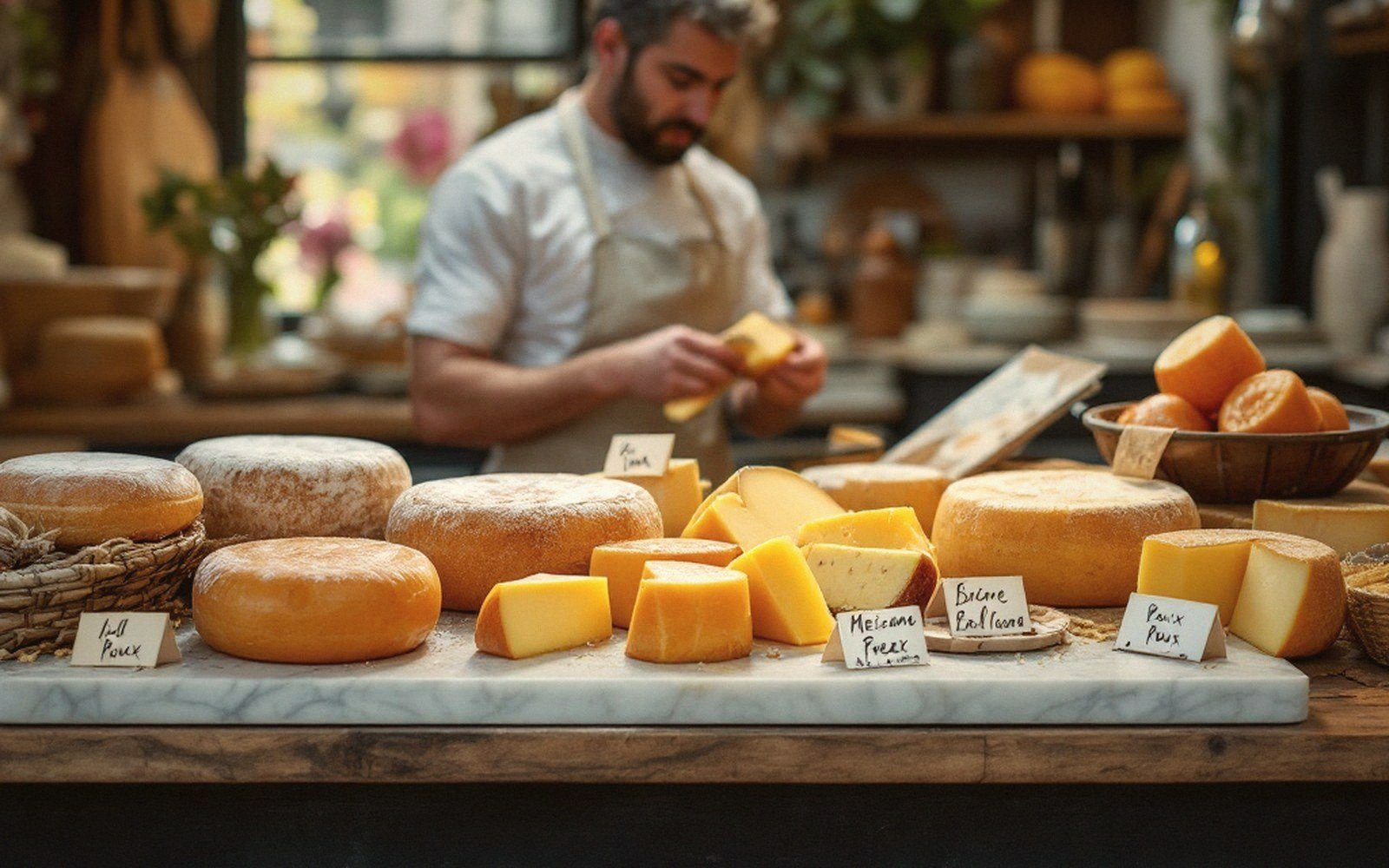
The best market fromageries — cheese specialists, as distinct from general traders — will often mark their boards with the age of the cheese and the name of the affineur alongside the producer. These are not vanity details. They tell you who made the decision about timing and who stands behind it. A good cheesemonger will also tell you how to keep the piece for the remaining days of its window: wrapped in the paper they use, not cling film, at the cool bottom of the refrigerator, taken out an hour before serving so the fats loosen and the aromas open.
Temperature at the moment of eating matters almost as much as the ageing. A cheese served straight from cold is muted — the same food, performing at a fraction of its range. This is perhaps the simplest thing an affineur would tell you if asked: the cheese is ready when it is ready, and then you have to be ready too.