










Stock is not soup
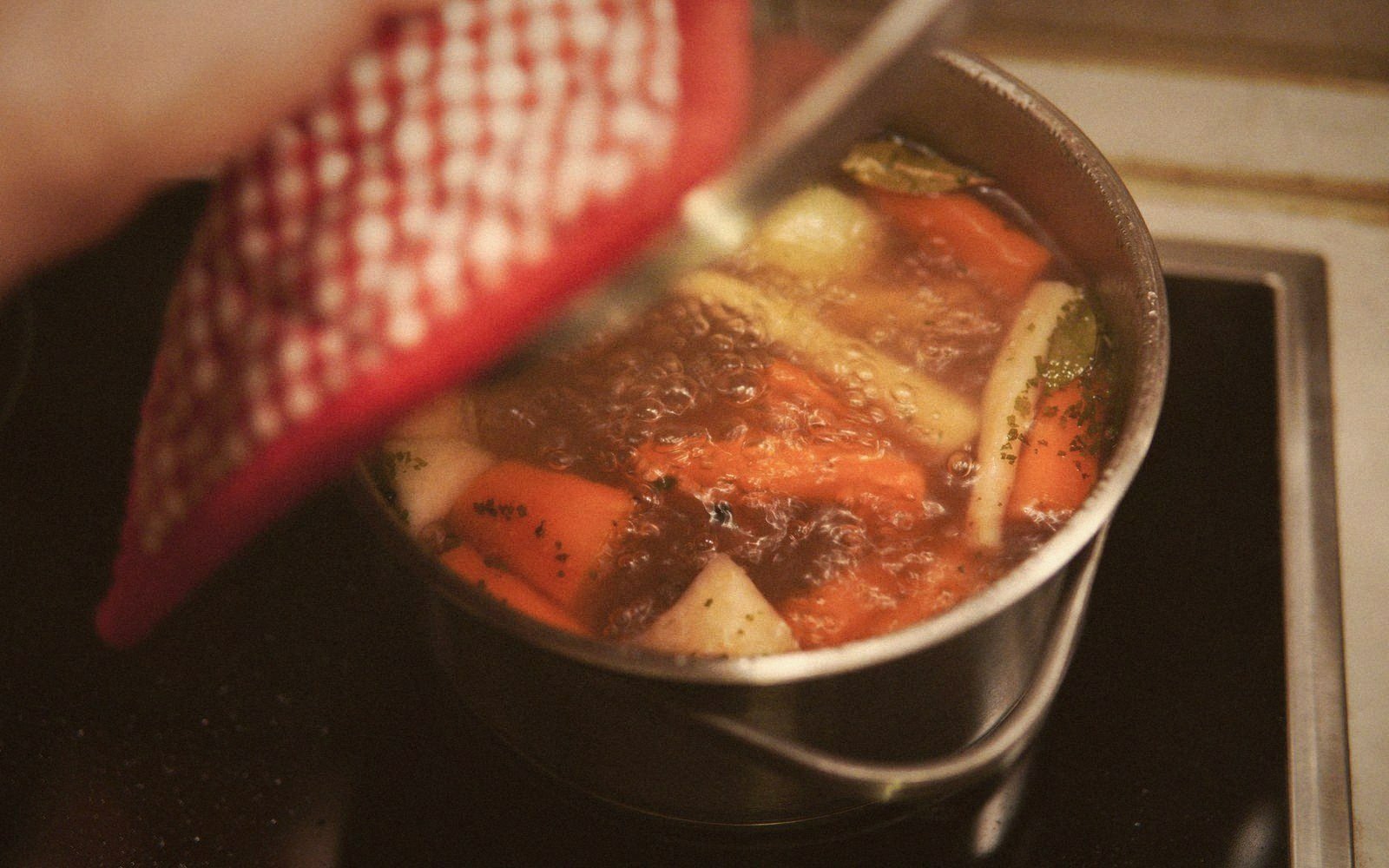
A stock is an extraction, not a dish: bones and aromatics held below a simmer for hours so the collagen converts and nothing emulsifies.
A publication about the techniques the repertoire rests on, and the dishes built out of them.
Foundations · The piece to read first
A stock is an extraction, not a dish: bones and aromatics held below a simmer for hours so the collagen converts and nothing emulsifies. Boil it and you get cloudy liquid with the fat beaten into it. Skimming, temperature, and why the pot is never covered.
Read the guide →Every entry says what a technique is for before it says how it is done.
Supported by
A stock is an extraction, not a dish: bones and aromatics held below a simmer for hours so the collagen converts and nothing emulsifies.
Butter that stays in pieces makes layers; butter that melts makes a biscuit.
All five techniques on one page, each with what it changes about the food, what decides it, and how it fails.
Not restaurant cooking and not a school. Every entry says what a technique is for — what it changes about the food — before it says how it is done.
| The question | One house says | The other says |
|---|---|---|
| Garlic ▲ | In — pounded raw into the sauce, where the south expects to taste it. | Out — or blanched to nothing, so the dish keeps a northern restraint. |
| The lid ▲ | On — steam kept in, the liquid stays put and the meat cooks wet. | Off or ajar — the sauce reduces and the surface browns; a different dish. |
| Salting ▲ | Early — overnight, so the brine draws in and seasons the interior. | Late — at the pan, for the crust; the middle window is the worst of both. |
Marked ▲ in the register: recorded rather than settled.