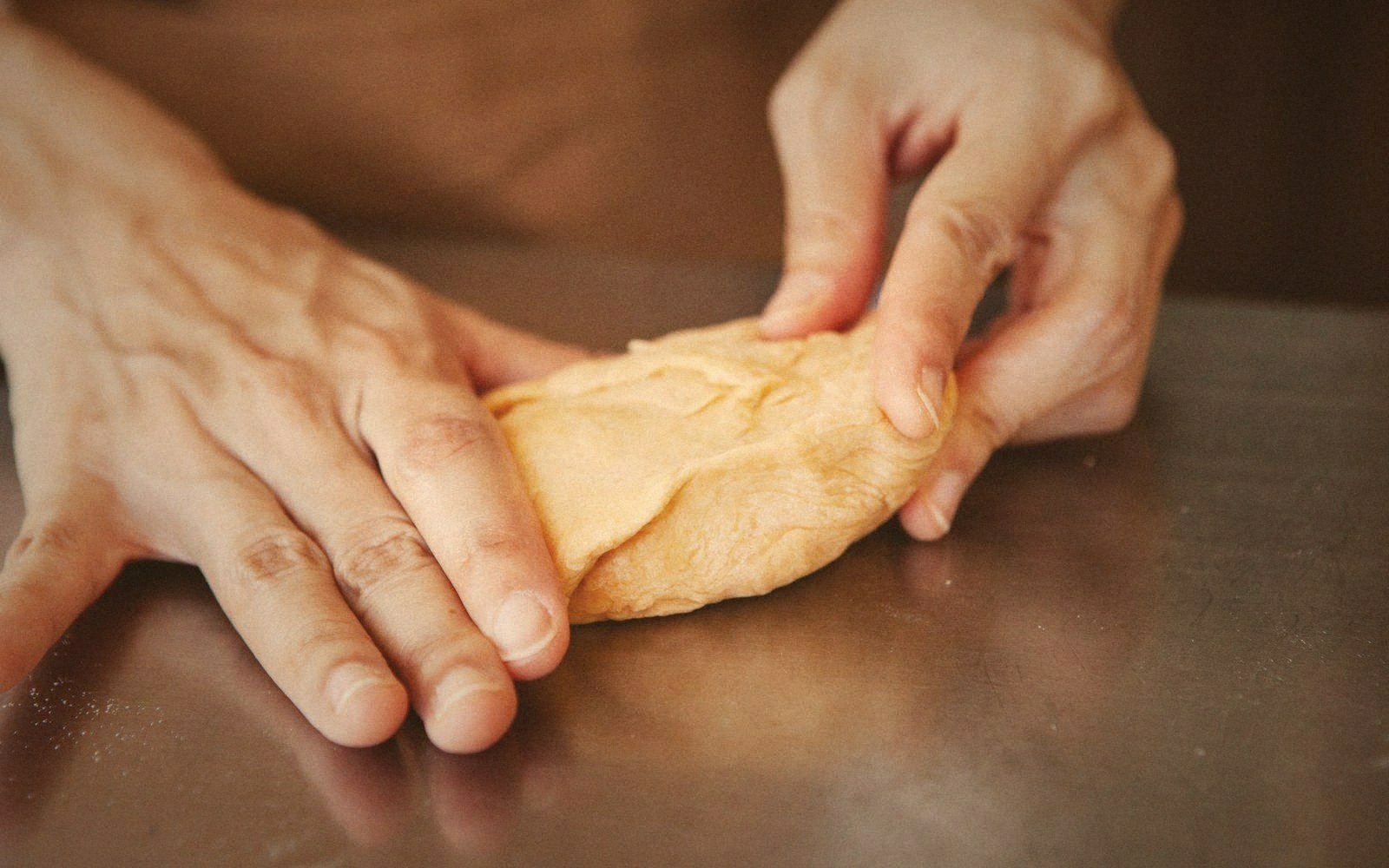
Why temperature is the whole game
Pastry dough contains butter in two fundamentally different states, and which state it's in when the oven heat arrives determines the texture of everything you bake. Keep the butter cold and distinct, and it stays as small, separate pieces coated in flour. When those pieces hit oven heat, the water inside them flashes to steam, pushing the surrounding dough apart in thin, distinct layers — flaky, short, shattering. Let the butter warm and merge with the flour before baking, and it becomes an even, continuous fat coating around every flour particle. That fat smothers gluten development uniformly, the dough bakes as a single tender crumb, and you get a biscuit rather than pastry. Neither result is wrong; they are simply different foods produced by the same ingredients at different temperatures.
The French make this distinction with care. Pâte brisée — the all-purpose short-crust — requires cold butter worked in until the mixture resembles coarse, irregular crumbs. Pâte feuilletée, puff pastry, takes the logic to its extreme: a solid block of butter folded repeatedly into a lean dough, each fold creating yet another layer, always at a temperature cold enough that the butter bends rather than squashes flat and absorbs into the dough. The working temperature for puff is low enough that professional kitchens chill the dough between every two or three folds.
This is why cold hands matter — and more practically, why cold equipment and a cold kitchen do. Hands transfer body heat directly to the dough. A marble slab chilled in the refrigerator, or simply a cool stone worktop, draws heat away instead of adding it. The old instruction to rub butter into flour quickly, with only your fingertips, is pure physics: fingertips are cooler than palms, and the rubbing motion coats flour in fat without generating enough friction to melt it. Some cooks grate frozen butter directly into the flour to start with evenly small pieces and zero warmup time.
Water — added last, in most short pastries — also needs to be ice-cold. Warm water activates gluten development immediately and raises the dough temperature; ice-cold water does neither until the oven demands it. Add it a tablespoon at a time, stopping the moment the dough coheres. Overworking after the water goes in is the second way to ruin what the cold hands preserved: mixing develops gluten, and developed gluten makes tough pastry regardless of how well you managed the butter.
The discipline is short and repeatable: keep everything cold, work quickly, stop before you're satisfied you've done enough.