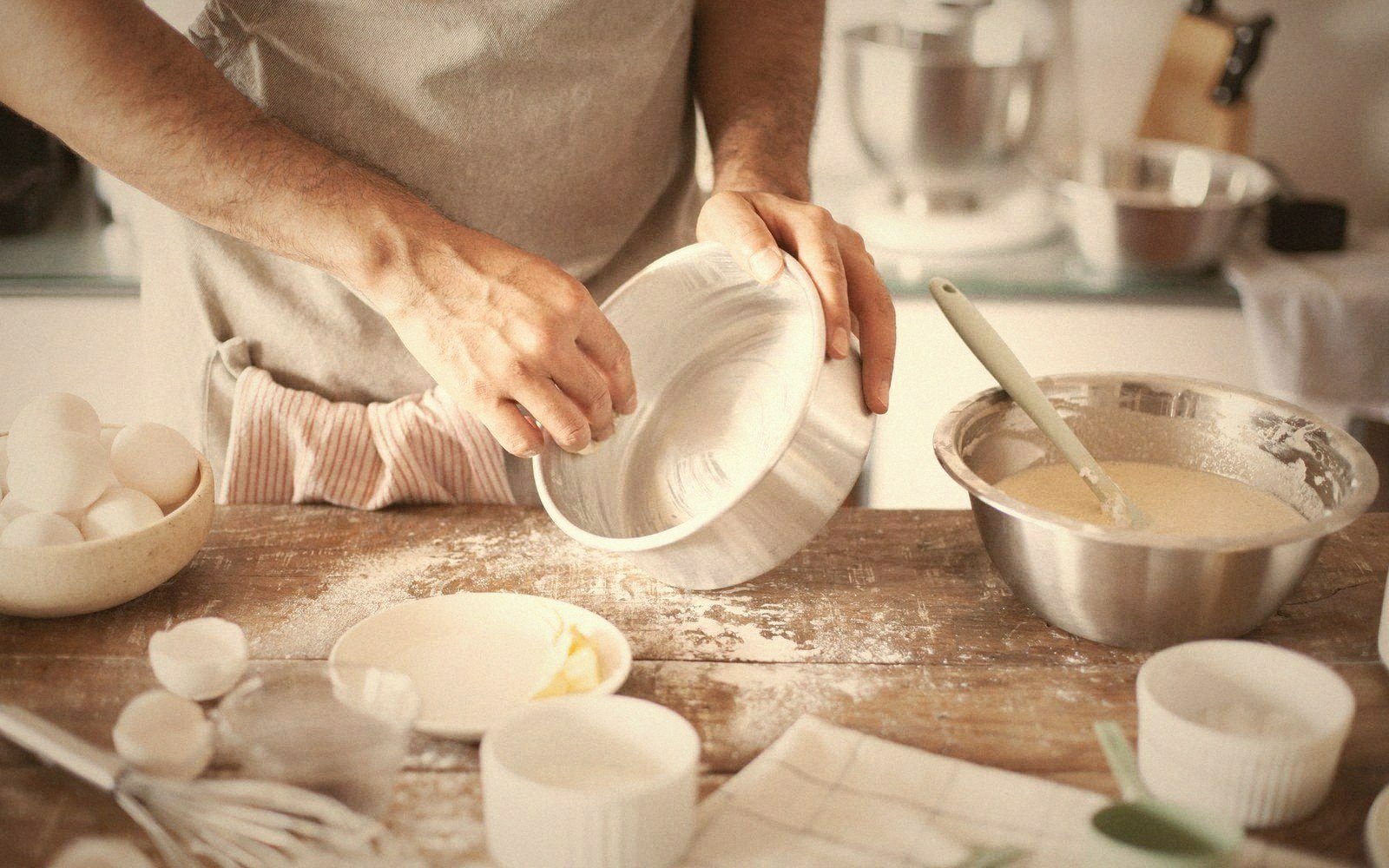
What you are doing and what you lose
A roux is flour cooked in fat — almost always butter — before any liquid arrives. The point of cooking it at all is to coat each starch granule in fat so the flour disperses into the liquid cleanly, without lumping. But cooking does something else too: it progressively destroys the starch's ability to absorb water. The longer and hotter the roux cooks, the more thickening power it loses. A white roux (roux blanc), pulled from the heat after barely two minutes, gives you maximum thickening. A dark roux (roux brun), cooked for ten to fifteen minutes to a deep hazelnut brown, gives you a third of that. You compensate by using more.
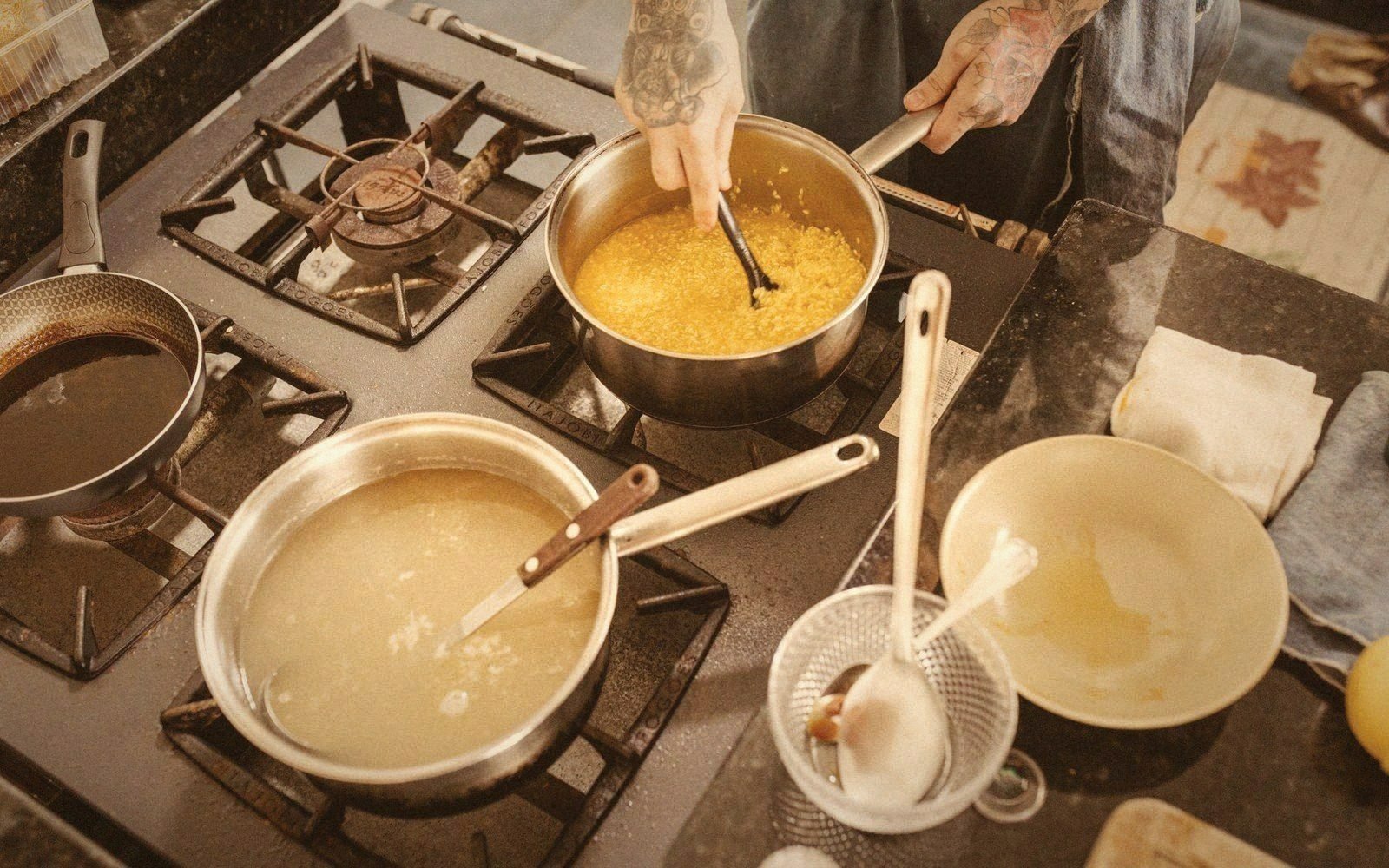
This is not a flaw in the method — it is the logic of the whole system. A sauce béchamel wants a pale, neutral base that holds a lot of liquid in a tight, creamy mass: white roux. A sauce veloutée uses a blond roux (roux blond), cooked a minute or two longer to lose the raw flour taste without losing too much body. A gravy built on roasting juices wants colour and depth more than it wants density: a darker roux delivers both.
The ratio is simpler than most books suggest. Equal weights of butter and flour are the convention, producing a workable paste. Shift toward more flour and the paste tightens and scorches more easily; shift toward more butter and it loosens, spreads in the pan and browns faster. Both adjustments are legitimate; neither is wrong. What matters is knowing which direction you want to go before you start, because you cannot reverse it.
The other thing a roux costs is time, specifically your attention for the first few minutes of cooking. The paste needs to move constantly — a wooden spoon around a warm pan — because it catches fast at the edges. Once the liquid goes in and the sauce comes up to temperature, the starch gelatinises and the whole thing suddenly thickens. This is the moment you either whisk hard or you have lumps. There is no recovery from lumps except a sieve, and even that is a partial fix.
Cook the roux long enough to smell biscuity and lose the chalk. Beyond that, you are trading thickening power for flavour, and every cook chooses a different rate of exchange.