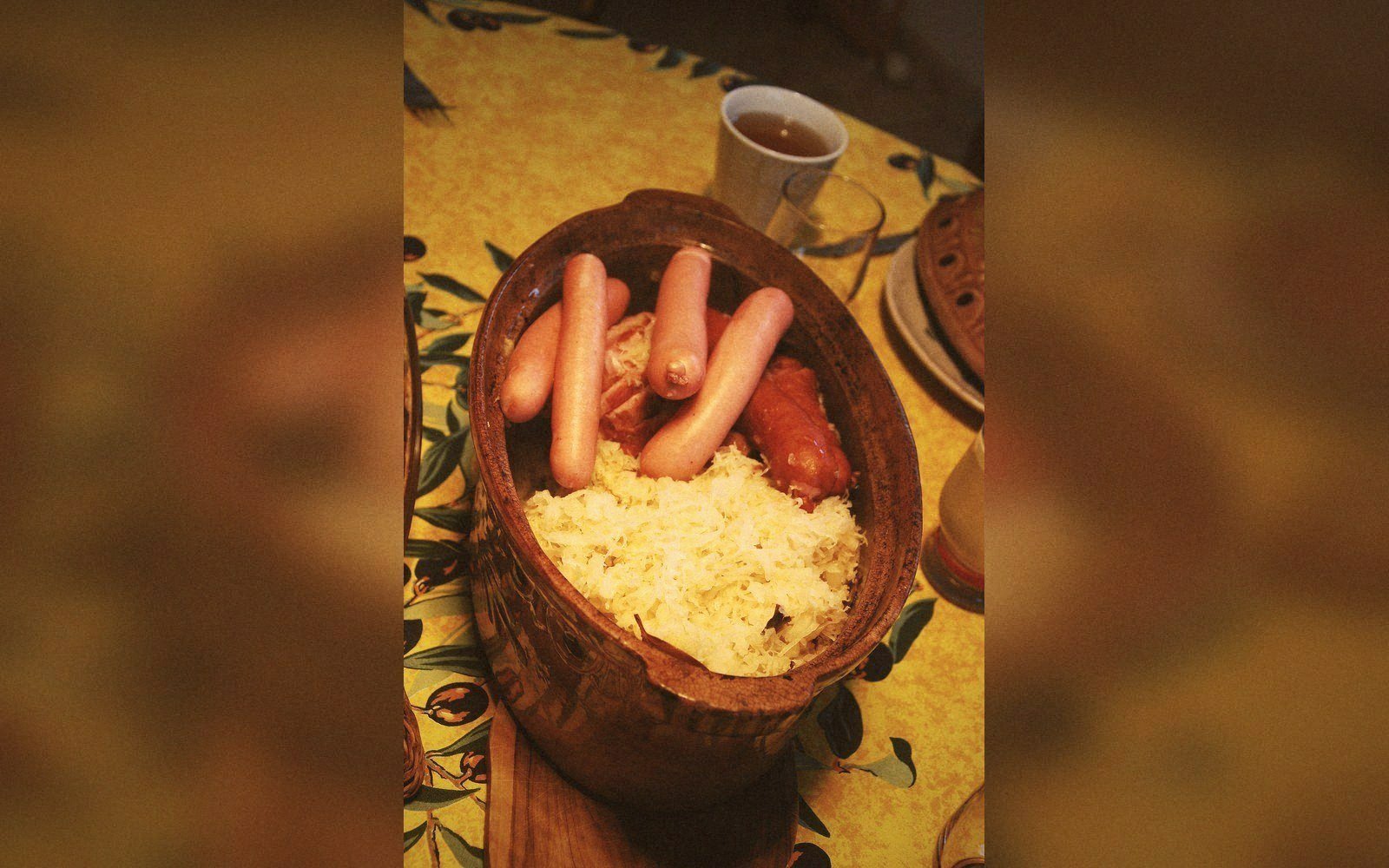
Pork, cabbage and riesling
Alsace spent centuries changing hands between France and Germany — definitively French since 1945, yet the food tells the longer story. The dialect is Alemannic, the half-timbered villages look Rhineland, and the kitchen follows suit. Pork fat rather than butter, white wine rather than red, cabbage in every form — preserved, braised, raw — and a preference for the sharp and the rich coexisting on the same plate.
Choucroute garnie — fermented cabbage cooked with several cuts of pork and sausage — is the region's most legible dish. The cabbage is acidulated by its own lactic fermentation, not by added vinegar, and that sourness is the point: it cuts through the fat of the poached palette (shoulder), the smoked Strasbourg sausages and the salt-cured belly that go in with it. The cooking liquid is usually Riesling, which brings fruitiness without weight. Everything simmers at the gentlest heat so the cabbage softens without losing its edge. This is a dish of textures as much as flavours — yielding pork against something that still has bite.
Flammekueche (also called tarte flambée in French) demonstrates the same logic: a thin, almost cracker-like dough base spread with fromage blanc, sliced onion and lardons, baked in a wood-fired oven hot enough that the edges char. The name means "flame-baked tart" and the crust is the whole point — the base must be crisp before the topping fully collapses.
Riesling appears again in coq au Riesling, the Alsatian answer to Burgundy's coq au vin: white wine instead of red, finished with cream rather than blood, the sauce a pale ivory that would scandalise the Côte d'Or but is completely at home here. The shift from one wine colour to the other changes the dish entirely — the acidity is sharper, the finish lighter. What the two dishes share is the principle behind them: a tough bird needs time in liquid, and the liquid flavours the sauce.
The border is always visible in the cooking. That is what makes Alsace interesting.