The fat draws the map
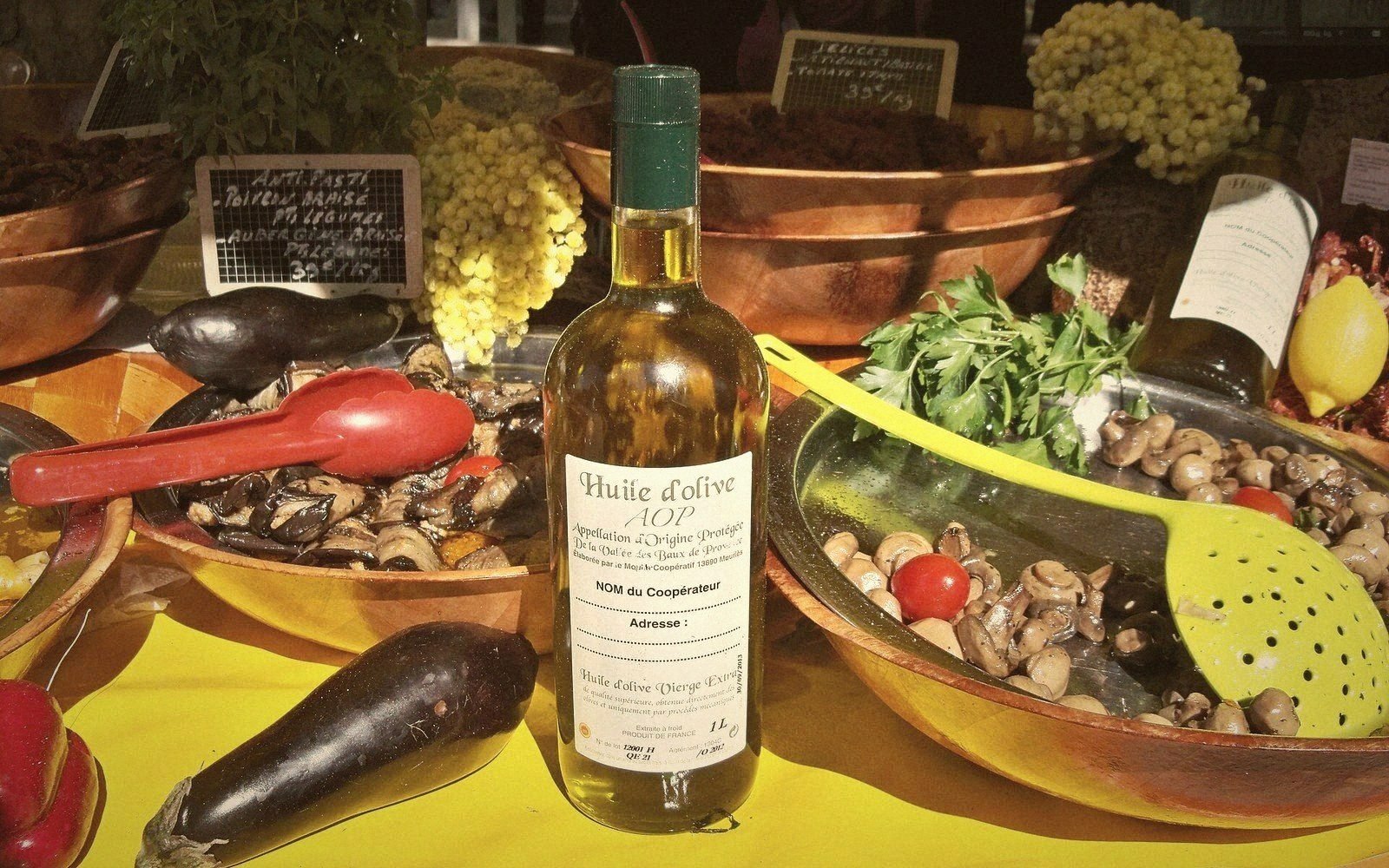
The French culinary divide that actually matters is not between Paris and the provinces, or between classic and regional: it is between butter country and oil country. Normandy reaches for cream. Alsace cooks in lard and goose fat. But in Provence — roughly from the Rhône delta east through the Var and into the Alpes-Maritimes — the olive tree sets the terms. Where it grows, you cook in its oil. Everything downstream of that fact follows.
Olive oil is not a neutral medium. It carries its own flavour into the dish, and Provençal cooking does not fight that — it builds toward it. The fat here is not a background lubricant but an ingredient with presence, which is why a daube provençale (a slow-braised beef stew) finishes richer and more assertive than a Norman braise in butter, and why aïoli — the great garlic emulsion of the region — would simply be a different food made with anything else. The oil is the point.
That same assertiveness means Provençal cooking defaults to bold, drying aromatics: thyme, rosemary, bay and savory grow wild across the garrigue (the scrubby limestone upland), and they are not added tentatively. They are bruised, scattered in quantities that might alarm a northern cook, and left to work through long cooking times. The fat carries their resins and volatile compounds in a way that butter, with its water content and more delicate solids, simply does not.
Acid and heat
The other structural difference is tomato. Northern French cooks use tomato as a background note or a sauce; Provençal cooks treat it as infrastructure. The tomato arrived in the south long before it was trusted in Paris, took hold in the Mediterranean climate, and became weight-bearing in dish after dish — in tian (a layered baked vegetable gratin), in ratatouille, in braised meats and fish alike. Combined with olive oil, it provides its own acid balance that renders wine vinegar almost unnecessary. Where a Norman dish might sharpen itself with cider, a Provençal dish sharpens itself with tomato and lemon.
Fish in Provence is seasoned and grilled or poached simply in court-bouillon (a short aromatic broth), then dressed with oil — not sauced with cream. Bouillabaisse, the great Marseillais fish soup, is explicitly constructed around olive oil: the oil is emulsified directly into the broth as the fish cooks, giving the liquid a body that no butter or cream would replicate in the same way. The discipline of buying fish matters particularly here, because the cooking is so spare that the fish's own quality is the entire argument.
What stays out
There is almost no flour in this cooking. Roux-thickened sauces, the spine of much classical French work, belong to a butter-and-milk culture. Provençal dishes thicken themselves through reduction, through the natural gelatine of braised meats, or through the slow collapse of vegetables. Tapenade (an olive and caper paste) needs no binder. Anchoïade (an anchovy dip) holds on oil alone. The cooking is deeply savoury in the glutamate-rich sense — anchovies, black olives and capers appearing constantly — without requiring the dairy richness that makes northern French cooking feel substantial.
Strip the butter out and you strip out a whole architecture: the beurre blanc, the cream sauce, the enriched braise. What replaces it is not a lesser version but a different system, built on fat that behaves differently, acid from a different source, and aromatics that could only grow on chalky hills in serious heat. Provence does not cook without butter by accident or poverty. It cooks without butter because the olive tree grew there first, and the whole cuisine grew around it.