What forms a crust, and what prevents it
A gratin — from the French verb gratter, to scrape — takes its name from the crust you drag a spoon through to serve it. That crust is the dish. The tender interior, however good, is preparation.
Three things build the surface: moisture leaving, proteins setting, and sugars browning. The Maillard reaction handles the last two — amino acids and reducing sugars recombine under dry heat above roughly 140°C, producing colour and the roasted flavour that no amount of time in a gentle oven replicates. Remove moisture fast enough at the surface and it browns; keep the surface wet and it steams, staying pale and slack. This is why a too-full dish, crammed with liquid, never quite gets there — the steam it generates defeats itself.
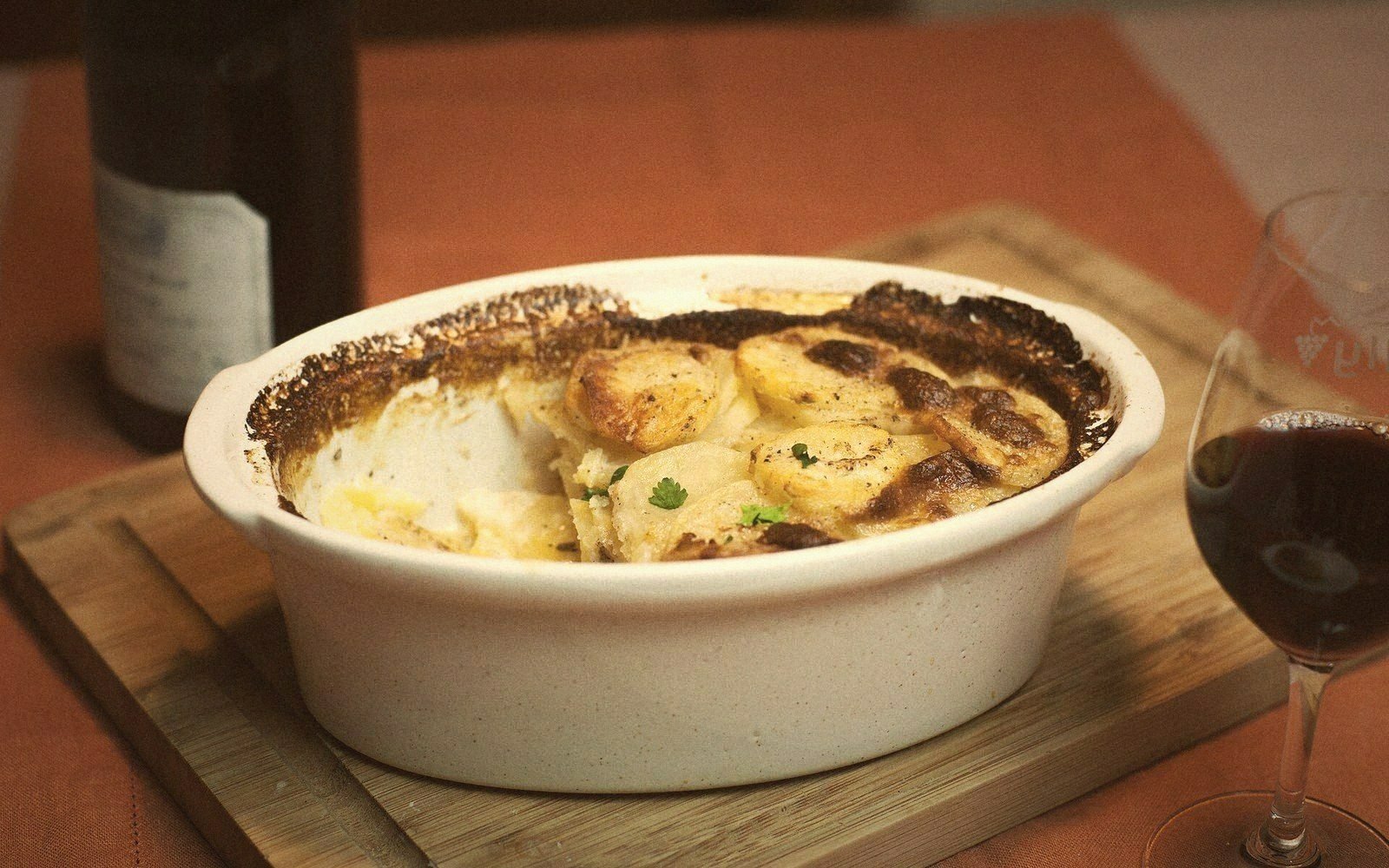
The crust's character depends on what you put on top. Grated cheese — a hard, aged one like Comté or Gruyère — gives a deeply savoury, slightly elastic skin that blisters and pulls. Breadcrumbs alone dry out and colour faster, giving more crunch and less chew; combined with cheese and butter they build a surface with layered texture. Cream-enriched gratins like the gratin dauphinois — thinly sliced potatoes in cream and garlic, no cheese on top in the stricter versions — rely on the cream's own proteins browning under high heat at the end, producing a spotted golden skin with a caramelised edge where the dish has caught against the tin. That caught edge is not a mistake.
Distance from the heat source matters too. A gratin finished close under a grill (gril or salamandre) browns in minutes but risks an underdone interior. One baked through first and then flashed under the grill gets the best of both. Getting the oven phase right — full cooking before the final blast — is the structural decision. The crust is quick; the cooking underneath is not.