Early, late, or both
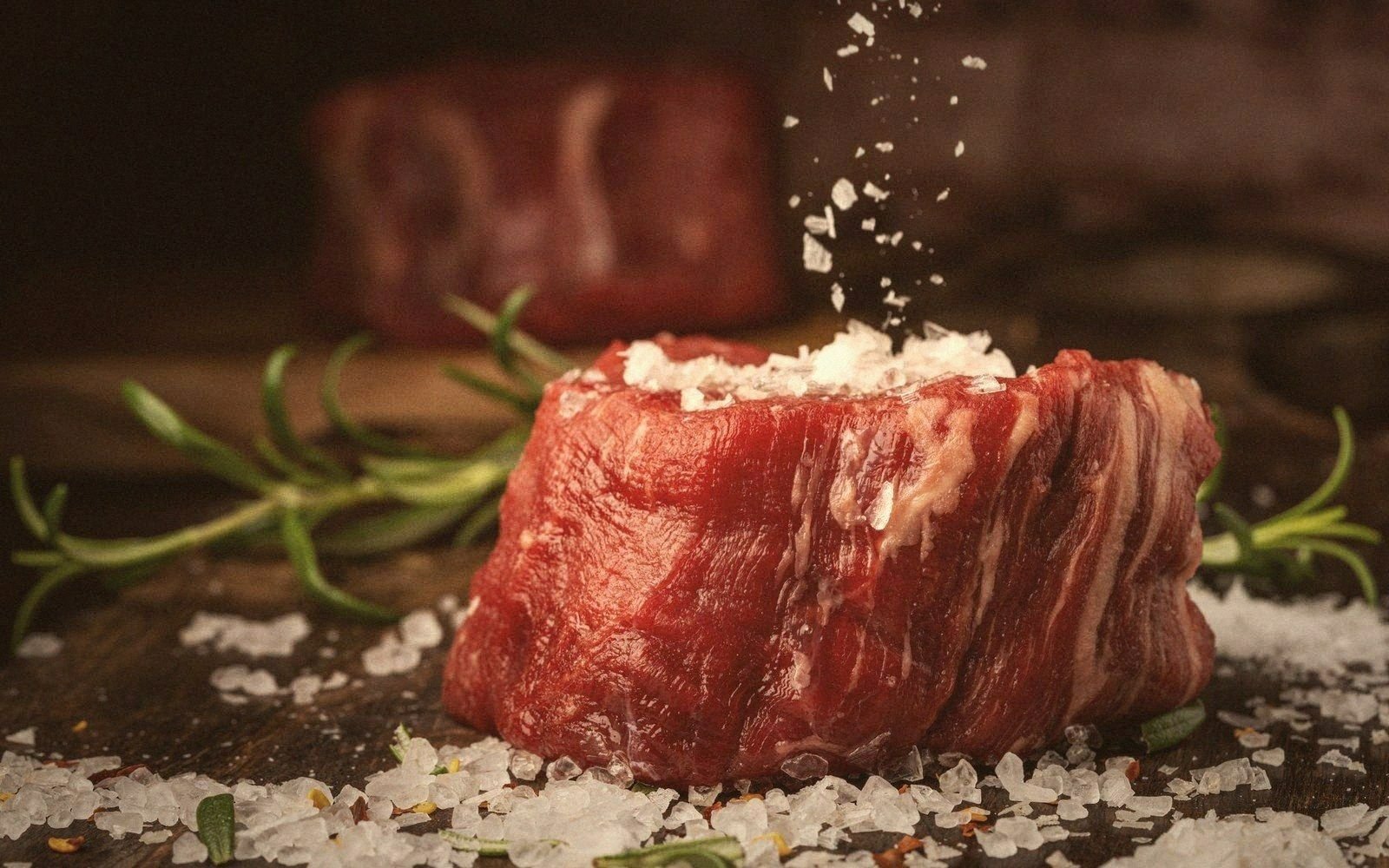
Salt draws moisture out of meat by osmosis. This is not a problem; it becomes one only if you stop there. Left on the surface for a few minutes, that moisture sits in a puddle and steams the meat instead of browning it. But hold another thirty to forty minutes and the brine is reabsorbed, carrying salt into the muscle fibres. Wait several hours — overnight for a thick roast — and the proteins begin to denature slightly, loosening their structure so the meat cooks more tenderly and seasons all the way through, not just at the crust.
Salting just before cooking, if you mean immediately before the pan, is defensible only if you are extremely quick: surface stays dry, browning is fast, flavour is external. Salting in the five-to-twenty-minute window is actually the worst of both worlds — surface wet, salt not yet reabsorbed — and this is where most home cooks land when they salt and then get distracted. The puddle on the plate is the evidence.
Late salting — at the table or in the final seconds — does something different again. It sits on the surface as distinct crystals, giving bursts of flavour and texture. Finishing salt is not seasoning the meat; it is seasoning the bite. Fleur de sel on a slice of roast lamb does not replace early salting; it is a second, separate act.
What this means in practice: salt a chicken or a pork shoulder the night before and leave it uncovered in the fridge — the surface dries further, and you get both deep seasoning and a better crust. Salt a steak the morning of cooking at the earliest, or in the final thirty seconds before it meets the pan. Salt a piece of fish two to five minutes ahead at most, because lean fish gives up its moisture faster and the window where reabsorption helps rather than harms is narrow.
The principle is consistent. The timing adjusts for what the protein can absorb and how long you have.