Position is a decision
The lid does not keep things warm. It controls moisture, and moisture controls everything else in a braise or a stew.
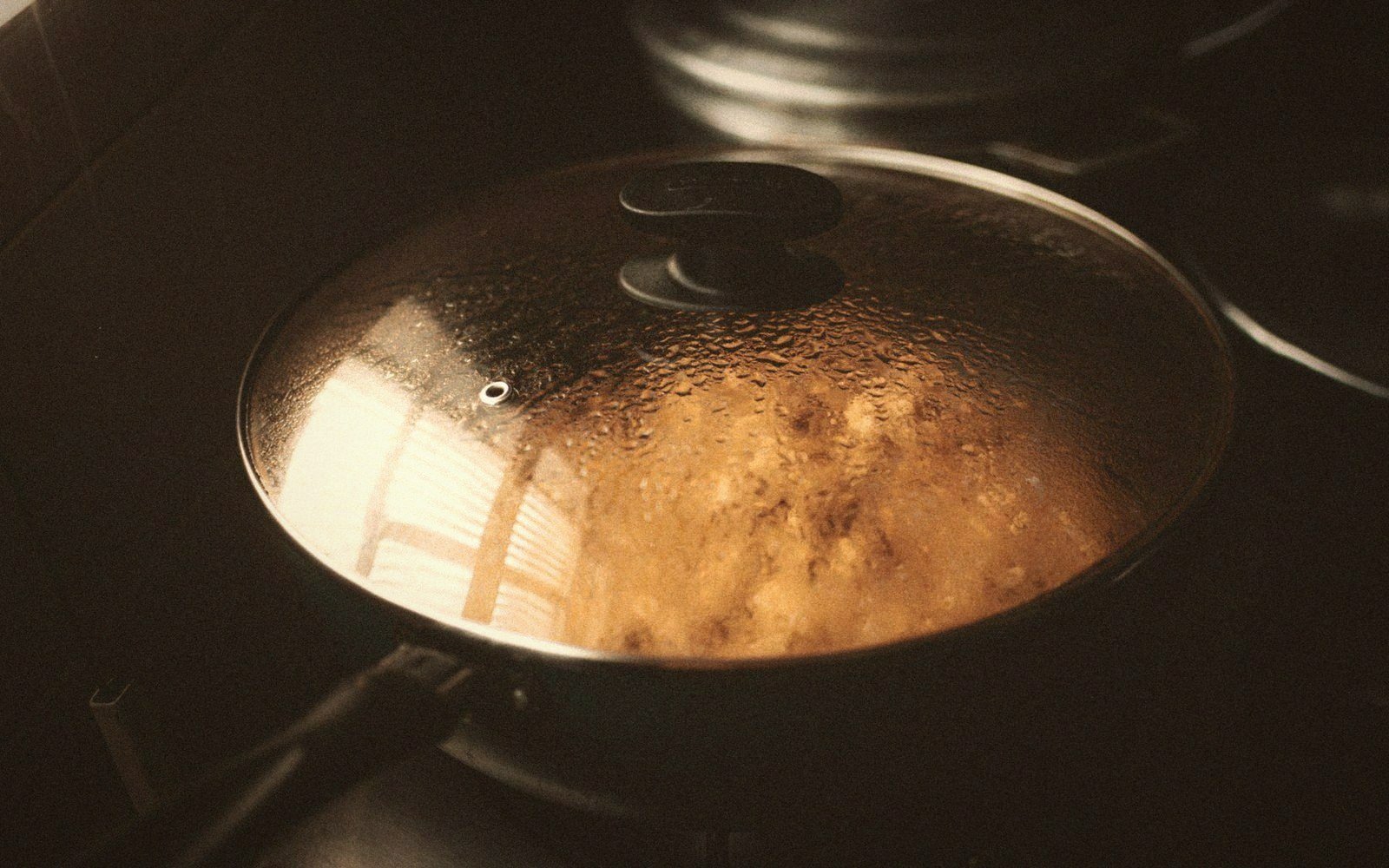
Put the lid on fully and you create a closed system. Steam rises from the liquid, condenses on the underside of the lid, and falls back into the pot. Almost nothing escapes. The liquid level barely drops; the temperature stays low and even; the collagen in a tough cut has time to convert without the sauce boiling hard enough to seize the meat. This is the lid-on world — gentle, self-basting, forgiving. A daube, the Provençal braised cut sealed with a flour-and-water paste called a lute, takes this to its logical end: zero evaporation, pure steam pressure inside, a sauce that never reduces at all and must be corrected at the end.
Take the lid off entirely and you flip the logic. Evaporation accelerates. The surface of the liquid cools relative to the base, convection increases, and the sauce concentrates. Gelatin from bones and connective tissue — assuming your stock was right — tightens the sauce to something that coats a spoon. The colour deepens. Aromatics that were trapped as steam now escape, and the flavour becomes more direct. This is finish cooking, reduction cooking; it changes the dish structurally, not just in degree.
The ajar lid — propped a centimetre or two with a wooden spoon — splits the difference deliberately. There is enough steam to keep the meat moist and the temperature stable, but a slow exit route for moisture, so the sauce reduces incrementally over a long cook. It is the setting most useful in the middle hour of a long braise: enough control to ignore, enough evaporation to arrive somewhere interesting.
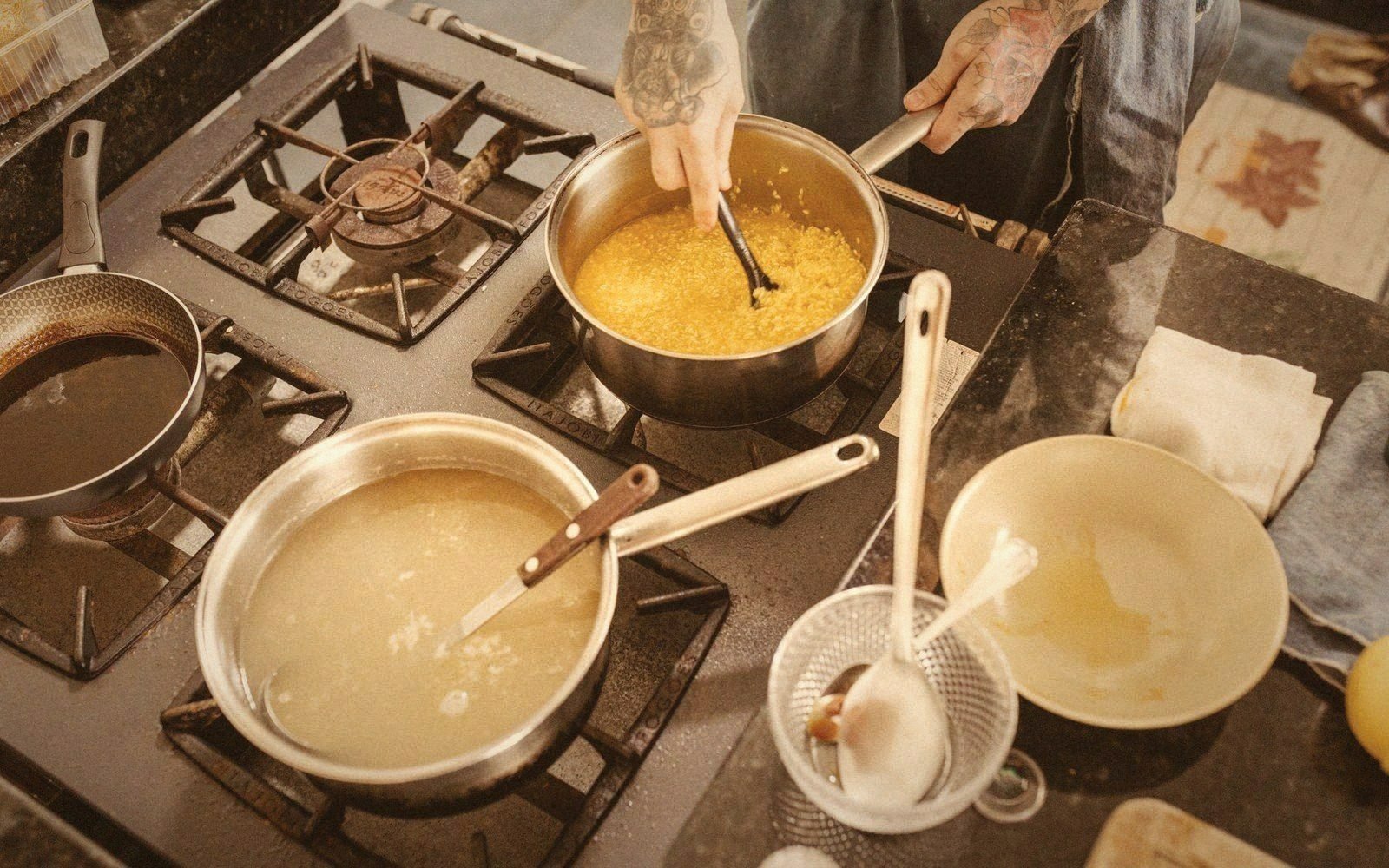
None of this is automatic. The right position depends on how much liquid you started with, how much reduction you want, and how tough the cut is. The mistake is to pick a position and forget it. Check at the halfway point. Adjust. The lid is a valve, not a switch.