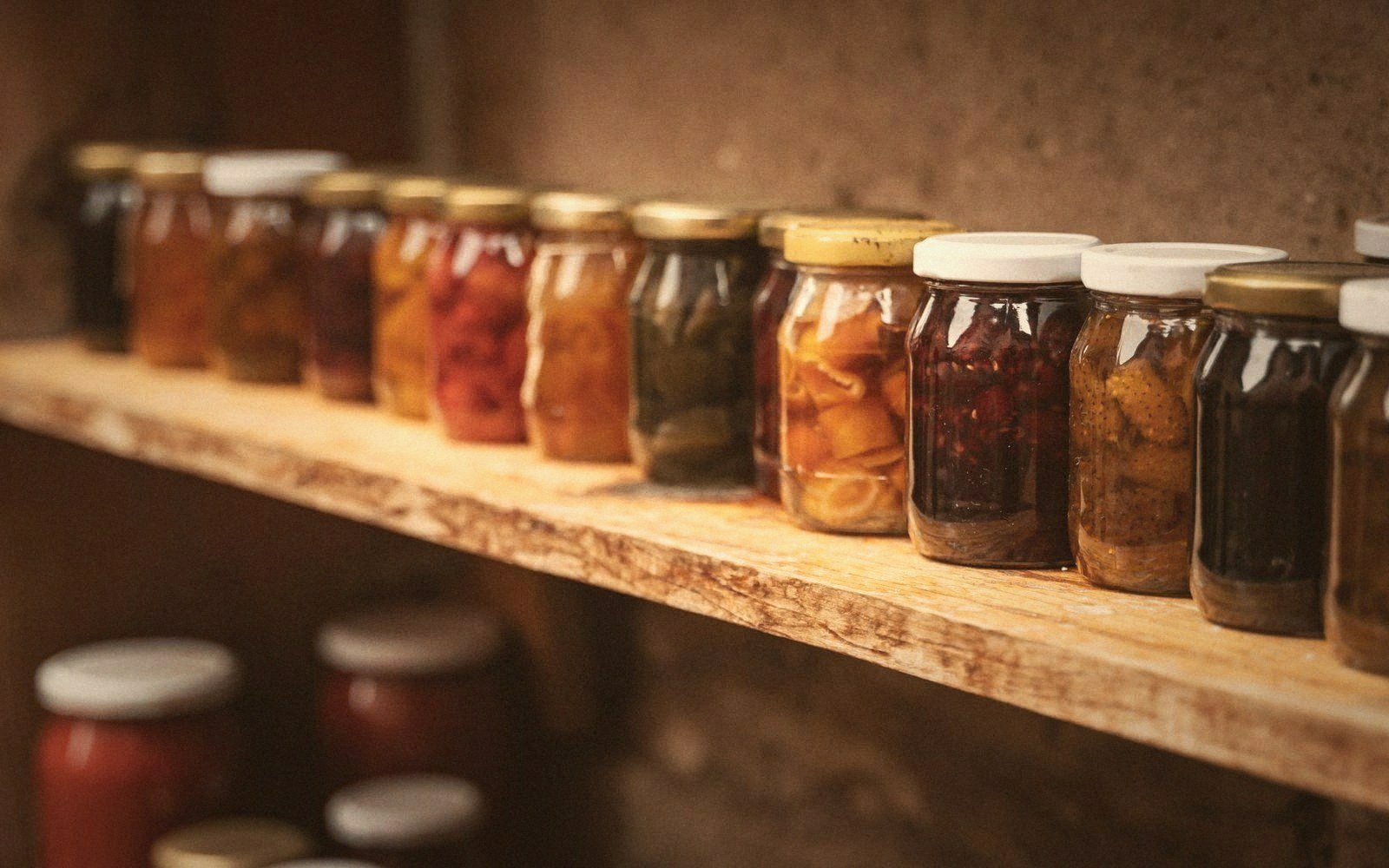
Salt, fat, sugar, acid, smoke
Before cold storage, keeping food was not a niche interest — it was the whole point of autumn. Every culture in northern and western France developed its own answer to the same problem: how to carry summer's abundance through winter without it killing you. The five techniques that emerged — salt, fat, sugar, acid and smoke — are not interchangeable. Each one works by a different mechanism, and each one changes the food in a different way.
Salt kills spoilage bacteria by drawing water out of cells through osmosis, reducing water activity to the point where microorganisms cannot function. It does not sterilise; it slows. Used heavily enough, as in a full saumure (brine) or a dry salt cure, it transforms texture as well as preserving it — the firm, almost mineral quality of salt cod or jambon cru is salt's signature. Used lightly and in combination with cold, it merely delays. The difference between a three-day cure and a three-month one is not degree; it is a different food at the end.
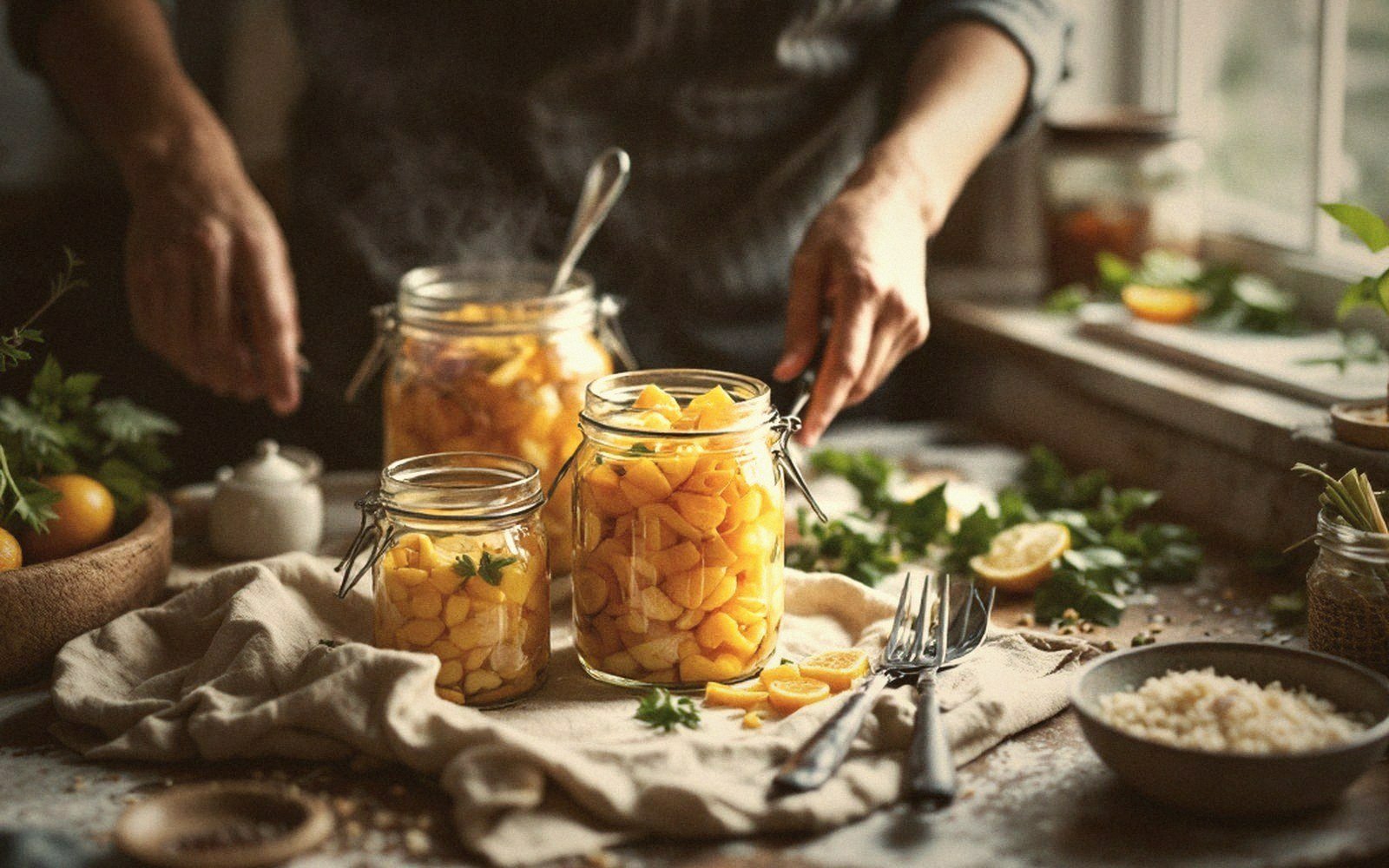
Fat works differently. Confit — duck legs submerged in their own rendered fat — is not brined; it is sealed. Bacteria need oxygen and water, and a layer of solidified fat denies them both. Charcuterie is preservation: rillettes, pâtés sealed under lard, andouille packed into its casing — all rely on this principle. The fat is not flavouring. It is infrastructure. This is why skimping on coverage fails, and why the technique worked for centuries without refrigeration when done correctly.
Sugar behaves like salt: it binds free water, raising the concentration around any microbial cell until the cell dehydrates. Jams and confits of fruit need a high enough sugar concentration — traditionally achieved by cooking well past the point the modern palate accepts — to be genuinely shelf-stable. The luscious, barely-set preserves fashionable in recent decades are a different category: refrigerator food. True confiture meant cooking until the mixture sheeted off a spoon, because the sugar-to-water ratio determined whether the jar kept through April.
Acid — vinegar, the acidity of fermentation — creates an environment where the bacteria most dangerous to humans cannot survive. The cornichon (small pickled cucumber) sits in enough vinegar that its pH drops below four; botulism cannot grow there. Fermentation is the more complex version: the lactobacillus bacteria that sour choucroute (fermented cabbage) produce lactic acid as a by-product, crowding out pathogens as they lower the pH. The cook's role in fermentation is not to add anything. It is to create conditions — salt concentration, temperature, anaerobic environment — where the right organisms win.
Smoke adds phenolic compounds to the surface of meat or fish that have genuine antimicrobial properties, but no one in a traditional farmhouse smokehouse was thinking in those terms. They knew that smoked ham lasted. The smoke also dries the surface, and drying is itself preserving: less water, less microbial activity. The flavour — that depth in smoked sausages from Alsace or the hams of the Auvergne — is a side effect. Pleasurable, but secondary to the original purpose.
What all five share is a transformation that cannot be undone. This is the character of preserved food: it is not fresh food that has been paused, but a new thing made under pressure from necessity. The taste of salt cod is not the taste of cod. Confit duck is not fresh duck. A well-made cornichon is its own object, not a cucumber with a delay. Understanding this is what separates cooking with preserved ingredients from merely tolerating them. When autumn's production feeds a winter table, the technique is the recipe — and the mark it leaves is the point.